
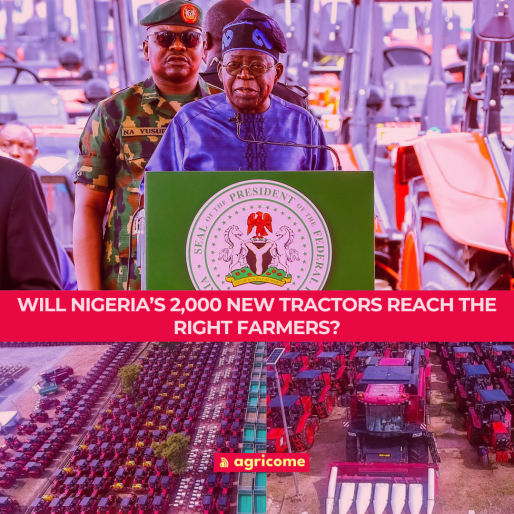
A few hours ago, Nigeria’s President, Bola Ahmed Tinubu, launched what was described as the largest agricultural mechanization initiative in Nigeria’s history. The program, part of the “Renewed Hope Agenda”, includes the deployment of 2,000 tractors, 50 bulldozers, 12 mobile workshops, and 9,000 complementary farming implements.
Undoubtedly, this is a bold and timely step; the administration has laid down an important marker. But behind the excitement, a critical question remains: will this effort reach the Nigerian smallholder farmers who produce the bulk of our food supply?
To make this initiative transformational, we must think beyond deployment figures and ask: How can inclusive systems help drive real impact at the grassroots?
WHAT IF:
• Every ward had a smart equipment cluster run by trained youth cooperatives?
• Smallholder farmers could book tractor services through simple USSD codes in their local languages?
• Tractor deployment was directly linked to verified production and market?
These are just a few of the possibilities. However, we would like to hear from you. What other ideas or approaches do you believe will guarantee last-mile delivery? Do you see this initiative impacting your community and your business?
Share your thoughts in the comments.